Glycol is one of the most commonly used heat transfer fluids in industrial applications. From data center cooling systems and HVAC loops to manufacturing processes and renewable energy systems, glycol helps protect equipment from freezing, improves heat transfer efficiency, and supports reliable operation in demanding environments.
As the use of glycol-based cooling systems continues to grow, engineers frequently ask an important question: Can a turbine flow meter accurately measure glycol?
The short answer is yes. Turbine flow meters can provide highly accurate and repeatable measurements of glycol and water-glycol mixtures when they are properly selected and sized for the application. However, glycol behaves differently from water and other low-viscosity fluids, making it important to understand how factors such as concentration, temperature, and viscosity can affect meter performance.
What Is Glycol and Why Is It Used?
Glycol is a heat transfer fluid commonly mixed with water to provide freeze protection and improve thermal management in closed-loop systems. The two most common types of glycol used in industrial applications are ethylene glycol and propylene glycol.
Ethylene Glycol
Ethylene glycol offers excellent heat transfer properties and is widely used in industrial cooling systems, chillers, and process applications where maximum thermal efficiency is required.
Propylene Glycol
Propylene glycol is commonly used in applications where reduced toxicity is important. It is frequently found in food processing, pharmaceutical manufacturing, and certain commercial HVAC systems.
Glycol solutions are available in various concentrations, typically ranging from 20 percent to 50 percent glycol by volume. As glycol concentration increases, fluid properties such as viscosity change significantly, which directly influences flow meter performance.
Common Applications That Measure Glycol Flow
Glycol flow measurement is required across numerous industries and applications.
Data Center Cooling Systems
Data centers have become one of the fastest-growing applications for glycol measurement. High-density computing environments generate significant amounts of heat, requiring advanced liquid cooling systems to maintain proper operating temperatures.
Typical data center applications include:
- Coolant Distribution Units (CDUs)
- Direct-to-chip liquid cooling systems
- Secondary cooling loops
- Redundant cooling circuits
- AI and high-performance computing facilities
Accurate glycol flow measurement helps operators verify cooling performance, optimize energy consumption, and ensure mission-critical reliability.
HVAC Systems
Commercial and industrial HVAC systems frequently utilize glycol-water mixtures to prevent freezing and improve heat transfer.
Common applications include:
- Chilled water systems
- Building heating loops
- Thermal energy storage systems
- District cooling networks
- Outdoor piping systems
Industrial Process Cooling
Many manufacturing operations rely on glycol systems to maintain stable process temperatures.
Applications may include:
- Injection molding equipment
- Chemical processing systems
- Heat exchangers
- Industrial chillers
- Process cooling skids
Reliable flow measurement allows operators to monitor system performance and protect valuable equipment from overheating.
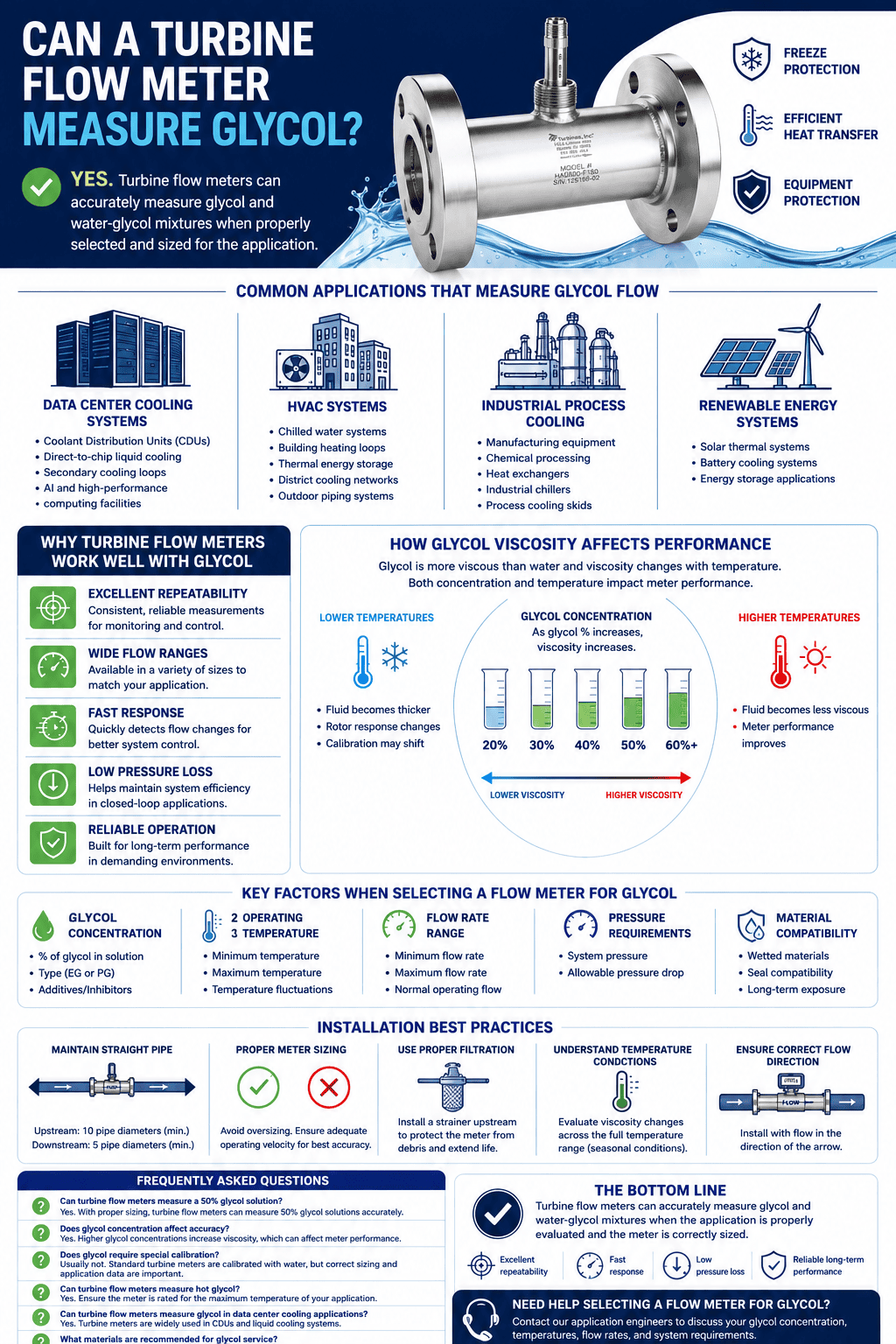
Can Turbine Flow Meters Measure Glycol Accurately?
In many applications, turbine flow meters can provide excellent performance when measuring glycol.
A turbine flow meter measures volumetric flow by placing a precision rotor directly in the flow stream. As fluid moves through the meter, the rotor spins at a speed proportional to the flow rate. Electronic pickup devices convert rotor speed into an output signal that can be displayed, monitored, or transmitted to control systems.
Because turbine flow meters offer excellent repeatability and fast response times, they are often an attractive option for closed-loop cooling applications.
Advantages of Turbine Flow Meters for Glycol Service
Excellent Repeatability
Many cooling systems require highly repeatable flow measurements rather than extremely high custody-transfer accuracy. Turbine flow meters provide consistent measurements that make them well-suited for monitoring cooling system performance.
Wide Flow Ranges
Glycol systems can vary considerably in size and operating conditions. Turbine flow meters are available in numerous line sizes and flow capacities, allowing engineers to select a meter that matches the application.
Fast Response
Cooling systems often experience changing loads and varying demand conditions. Turbine flow meters respond quickly to flow changes, making them useful for process monitoring and control.
Low Pressure Loss
Pressure drop is an important consideration in closed-loop cooling systems. Properly sized turbine flow meters generally produce relatively low pressure losses and help maintain system efficiency.
Why Glycol Viscosity Matters
Although turbine flow meters can accurately measure glycol, understanding fluid viscosity is critical.
Glycol Is More Viscous Than Water
One of the biggest differences between glycol and water is viscosity. Glycol-water mixtures are thicker than water and become increasingly viscous as glycol concentration rises.
Higher viscosity can affect how easily the turbine rotor spins and may influence meter performance if not properly considered during meter selection.
Temperature Changes Viscosity
Temperature has a major effect on glycol properties.
At lower temperatures, glycol becomes significantly thicker. Increased viscosity can alter rotor response and affect meter calibration.
At higher temperatures, glycol becomes less viscous and often behaves more similarly to water.
For this reason, engineers should always evaluate both the glycol concentration and the expected operating temperature range before selecting a flow meter.
Factors to Consider When Selecting a Flow Meter for Glycol
Several factors should be evaluated to ensure accurate glycol measurement.
Glycol Concentration
Understanding the glycol percentage is essential because concentration directly affects viscosity and flow characteristics.
Questions to consider include:
- Is the fluid 20%, 30%, or 50% glycol?
- Is it ethylene glycol or propylene glycol?
- Are inhibitors or additives present?
Operating Temperature
Temperature significantly affects glycol behavior and should always be included during application review.
Engineers should identify:
- Minimum operating temperature
- Maximum operating temperature
- Seasonal temperature variations
- Startup conditions
Flow Rate Requirements
The expected flow range determines proper meter sizing.
Important questions include:
- What is the minimum flow rate?
- What is the maximum flow rate?
- What is the normal operating flow?
Selecting the correct meter size is critical because oversized meters may struggle to achieve adequate rotor speed during low-flow conditions.
Pressure Requirements
Cooling systems often operate under specific pressure limitations.
Engineers should understand:
- System operating pressure
- Maximum allowable pressure drop
- Available pumping capacity
Material Compatibility
Although glycol is generally compatible with many common materials, it is still important to verify material compatibility for long-term reliability.
Considerations may include:
- Wetted materials
- Seal materials
- Additives and inhibitors
- Temperature exposure
Installation Best Practices for Measuring Glycol
Proper installation can significantly improve measurement performance.
Maintain Adequate Straight Pipe
Flow disturbances created by elbows, valves, and pumps can negatively affect turbine flow meter accuracy. Maintaining adequate straight pipe runs upstream and downstream of the meter helps produce stable flow profiles and improves measurement repeatability.
Install Proper Filtration
Because turbine flow meters contain precision moving components, upstream filtration is recommended. Clean fluid helps protect bearings and rotors while reducing maintenance requirements.
Avoid Oversizing
One of the most common application mistakes is selecting a flow meter that is too large for the actual operating conditions. Proper meter sizing ensures the rotor operates within its intended performance range.
Consider Seasonal Conditions
Outdoor cooling systems may experience substantial temperature swings throughout the year. Evaluating viscosity under both winter and summer operating conditions can prevent performance issues and improve measurement reliability.
Is a Turbine Flow Meter Right for Your Glycol Application?
For many cooling and heat transfer applications, turbine flow meters offer an excellent combination of repeatability, fast response, and reliable long-term performance.
Applications such as data center cooling systems, industrial process cooling loops, and HVAC systems frequently benefit from turbine flow measurement when fluid properties and operating conditions are properly evaluated.
The key to success is understanding the relationship between glycol concentration, temperature, viscosity, and flow range. By properly sizing the meter and accounting for these variables during selection, turbine flow meters can provide accurate and dependable glycol flow measurement across a wide range of industrial applications.
If you are measuring glycol in a cooling or heat transfer system, working with an experienced application engineer can help ensure the selected meter is optimized for your specific fluid properties and operating conditions.