How Proper Material Selection Protects Industrial Flow Measurement Systems
Selecting the correct flow meter technology is only one part of building a reliable flow measurement system. Just as important is ensuring the meter materials are fully compatible with the process fluid. Overlooking fluid compatibility can lead to inaccurate readings, premature equipment failure, process contamination, and costly downtime.
In industrial environments where systems may handle corrosive chemicals, cryogenic liquids, hydrocarbons, or abrasive slurries, compatibility engineering becomes a critical part of system design. The interaction between the process media and the materials inside a flow meter directly impacts long-term performance, accuracy, and safety.
A properly engineered flow measurement system considers not only the fluid itself, but also the operating pressure, temperature, viscosity, chemical composition, and cleaning procedures used throughout the process lifecycle.
What Is Fluid Compatibility in Flow Measurement?
Fluid compatibility refers to how process media interact with the materials used within a flow meter and surrounding instrumentation. These materials may include:
- Meter bodies
- Rotors and internal moving components
- Bearings
- O-rings and seals
- Coatings
- Sensor housings
- Electronics enclosures
Many engineers assume compatibility simply means whether a material resists corrosion. In reality, compatibility engineering is much broader. Certain fluids may cause swelling in elastomers, embrittlement in plastics, erosion from suspended particles, or degradation due to thermal cycling.
Even minor material degradation can impact calibration stability and measurement repeatability over time.
For turbine flow meters in particular, material compatibility is especially important because internal rotating components rely on precise tolerances and smooth operation to maintain accuracy.
Why Fluid Compatibility Matters
A flow meter operating in an incompatible environment may initially function properly but fail prematurely after prolonged exposure. In many industrial applications, the consequences extend far beyond replacing a damaged meter.
Common Problems Caused by Poor Compatibility
- Corrosion of internal components
- Seal swelling or cracking
- Rotor drag from buildup or deposits
- Bearing wear
- Leakage
- Measurement drift
- Product contamination
- Reduced calibration accuracy
- Unexpected process downtime
In industries such as chemical processing, oil and gas, aerospace fueling, and cryogenic systems, these issues can become major operational or safety concerns.
High-pressure systems create additional challenges because pressure can accelerate material fatigue and amplify weaknesses in seals and internal components.
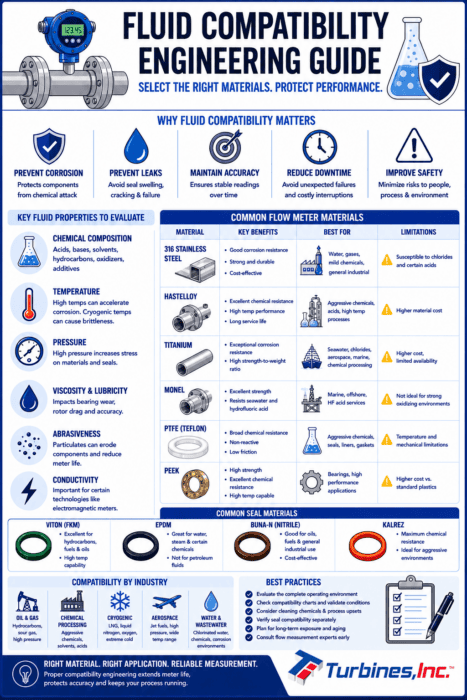
Key Fluid Properties Engineers Must Evaluate
Proper compatibility analysis starts with understanding the full process conditions — not just the primary fluid name.
Chemical Composition
Different chemicals attack materials in different ways. Acids, solvents, hydrocarbons, oxidizers, and caustic compounds all present unique compatibility concerns.
Even small chemical additives or contaminants can dramatically alter material performance over time.
Temperature
Temperature often changes compatibility characteristics significantly. Materials that perform well at ambient temperatures may degrade rapidly at elevated temperatures or become brittle in cryogenic environments.
Cryogenic applications involving LNG, liquid oxygen, or liquid nitrogen require special attention to thermal contraction and low-temperature material properties.
Pressure
High operating pressures can intensify compatibility issues by increasing stress on seals, gaskets, and internal components.
Pressure cycling during startup and shutdown can also accelerate fatigue and long-term wear.
Viscosity & Lubricity
Low-viscosity fluids may provide insufficient lubrication for turbine meter bearings, while highly viscous fluids can increase drag and reduce accuracy.
Abrasiveness
Fluids containing suspended solids or particulates can erode rotors, bearings, and meter housings over time. Abrasive media often require hardened materials or alternative flow technologies.
Common Flow Meter Materials and Their Applications
Different flow meter materials are selected based on the operating environment and fluid properties.
316 Stainless Steel
316 stainless steel is one of the most common materials used in industrial flow meters due to its excellent corrosion resistance and broad chemical compatibility.
It performs well in:
- Water applications
- Many hydrocarbons
- Industrial gases
- Mild chemical environments
However, chloride-rich fluids and certain aggressive acids can still cause corrosion over time.
Hastelloy
Hastelloy alloys provide outstanding resistance to aggressive chemicals and high-temperature environments.
These materials are commonly used in:
- Chemical processing
- Acid handling systems
- Corrosive industrial applications
Titanium
Titanium offers exceptional resistance to seawater, chlorides, and many corrosive environments while maintaining high strength-to-weight ratios.
It is frequently used in:
- Aerospace systems
- Marine applications
- Chemical processing environments
PTFE (Teflon)
PTFE is widely used for seals and internal components because of its broad chemical resistance.
Its non-reactive properties make it valuable in aggressive chemical applications, although temperature and mechanical limitations still apply.
Seal and O-Ring Compatibility Is Often Overlooked
One of the most common engineering mistakes is focusing only on the meter body while overlooking seal materials.
O-rings and elastomers are often the first components to fail when exposed to incompatible fluids or temperatures.
Common Seal Materials
Viton (FKM)
Well-suited for:
- Hydrocarbons
- Fuels
- Oils
- Elevated temperatures
EPDM
Commonly used for:
- Water
- Steam
- Certain cleaning chemicals
Not ideal for petroleum-based fluids.
Buna-N (Nitrile)
Frequently selected for:
- Oils
- Fuels
- General industrial applications
Kalrez
Used in highly aggressive chemical environments requiring maximum chemical resistance.
Fluid Compatibility Challenges by Industry
Different industries present unique compatibility concerns that influence flow meter design and material selection.
Oil & Gas
Hydrocarbons, sour gas, and high-pressure environments require durable materials capable of resisting corrosion and mechanical stress.
Chemical Processing
Aggressive chemicals often demand specialized alloys and chemically resistant seals to prevent rapid degradation.
Cryogenic Systems
Cryogenic fluids create extreme thermal stresses that can affect seals, metal expansion rates, and material brittleness.
Aerospace Fuel Systems
Fuel measurement systems must maintain precise accuracy while handling temperature fluctuations and demanding operating conditions.
Best Practices for Fluid Compatibility Engineering
The most reliable flow measurement systems are designed with long-term compatibility in mind from the beginning of the project.
Recommended Engineering Practices
- Evaluate the complete operating environment
- Review chemical compatibility charts carefully
- Account for startup and shutdown conditions
- Verify compatibility of seals separately from metal components
- Consider cleaning and maintenance chemicals
- Analyze pressure and temperature cycling
- Plan for long-term exposure effects
- Consult flow measurement specialists when needed
Many compatibility failures occur because engineers evaluate only normal operating conditions while overlooking transient events, maintenance chemicals, or process upsets.
Fluid Compatibility Overview
Fluid compatibility engineering plays a major role in the reliability, accuracy, and longevity of industrial flow measurement systems. Proper material selection protects against corrosion, seal degradation, measurement drift, and premature equipment failure.
Every application presents unique challenges based on fluid chemistry, pressure, temperature, and operating conditions. A successful flow measurement solution requires evaluating the complete process environment — not simply selecting a meter that appears chemically resistant on paper.
Whether designing systems for cryogenic liquids, industrial gases, hydrocarbons, or chemical processing applications, compatibility analysis should be a core part of the engineering process from the start.
Careful compatibility planning ultimately reduces downtime, improves measurement performance, and extends the life of critical flow instrumentation.